Software-as-a-Service has matured, but SaaS architecture in 2026 looks very different from what most teams were building even three or four years ago. The old playbook—one large backend, a shared database, and a handful of background jobs—simply doesn’t hold up anymore.
Today’s SaaS products must scale globally, release features continuously, stay secure by default, and integrate AI without collapsing under cost or complexity. This article breaks down how modern SaaS architecture actually works in 2026, why older approaches fail, and what patterns successful teams are adopting instead.
Why Traditional SaaS Architectures Break at Scale
Many SaaS products still struggle not because of lack of features, but because of architectural debt accumulated early on.
Common pain points include:
- Performance degradation as customer count grows
- Deployment anxiety due to tightly coupled services
- High cloud costs caused by inefficient scaling
- Security risks from shared infrastructure
- Difficulty integrating AI and data pipelines
In 2026, scalability is no longer just about handling traffic. It’s about organizational scalability, cost predictability, and engineering velocity.
Core Principles of Modern SaaS Architecture (2026)
Before diving into components, it’s important to understand the principles guiding modern SaaS design.
1. Modularity Over Monoliths
While monoliths are not inherently bad, most modern SaaS teams move toward modular architectures. These allow teams to evolve parts of the system independently without breaking everything else.
This doesn’t always mean full microservices. Many successful products adopt:
- Modular monoliths
- Domain-oriented services
- Clear service boundaries
The goal is change isolation, not complexity.
2. API-First Thinking
In 2026, every SaaS product is also a platform—even if customers never see it.
API-first design enables:
- Faster frontend iteration
- Easier integrations and partnerships
- Cleaner internal service communication
Well-designed APIs become the backbone of scalability.
3. Cloud-Native by Default
Modern SaaS is built assuming:
- Ephemeral infrastructure
- Horizontal scaling
- Managed cloud services
This mindset shifts teams away from server management and toward system behavior and resilience.
Reference Architecture: A Modern SaaS Stack
Here’s how many high-growth SaaS products are structured in 2026.
Frontend Layer: Experience at Scale
The frontend is no longer a thin UI on top of the backend. It is a performance-critical, intelligence-driven layer.
Typical choices include:
- React or similar frameworks
- Server-side rendering or edge rendering
- CDN-backed asset delivery
Frontend systems increasingly integrate AI features such as smart search, recommendations, and contextual assistance.
Backend Services: From Monoliths to Domains
Modern backends are organized around business domains, not technical layers.
Common patterns:
- Core domain services (billing, users, workflows)
- Supporting services (notifications, search, analytics)
- Event-driven communication between services
This allows teams to scale development without stepping on each other.
Data Architecture: Beyond a Single Database
The single shared database model is one of the biggest scalability bottlenecks.
In 2026, SaaS products use:
- Purpose-built databases per service
- Read replicas and caching layers
- Event streams for analytics and AI
Data architecture is designed around access patterns, not convenience.
Event-Driven Systems: The Nervous System of SaaS
Events play a central role in modern SaaS platforms.
Instead of synchronous calls everywhere, systems emit events such as:
- User signed up
- Payment completed
- Model inference triggered
These events power:
- Audit logs
- Analytics pipelines
- AI training and feedback loops
This decoupling dramatically improves resilience.
AI as a First-Class Architectural Component
AI is no longer an add-on. In 2026, it shapes architectural decisions.
SaaS products integrate AI through:
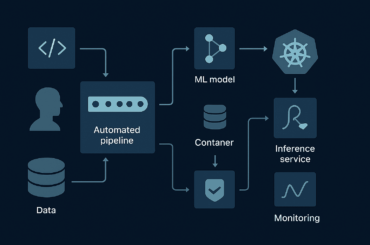
- Inference services
- Vector databases
- Retrieval-augmented generation (RAG)
This requires careful isolation to avoid runaway costs and unpredictable latency.
Many SaaS teams start their AI journey by experimenting with lightweight tools before committing to production-grade systems. This approach helps teams understand real usage patterns, latency expectations, and cost behavior long before AI becomes deeply embedded in their core workflows.
Security Architecture: Zero Trust by Design
Security is embedded into architecture, not layered on later.
Modern SaaS security includes:
- Service-to-service authentication
- Least-privilege access
- Identity-aware proxies
Zero Trust principles guide internal and external access alike.
Deployment and CI/CD: Shipping Without Fear
Modern SaaS teams deploy multiple times per day.
This is enabled by:
- Automated CI/CD pipelines
- Canary and blue-green deployments
- Feature flags and rollbacks
Deployment is treated as a routine operation, not a risky event.
Observability: Knowing What Your System Is Doing
In 2026, you can’t manage what you can’t observe.
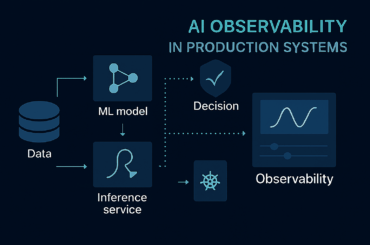
Modern SaaS platforms invest heavily in:
- Distributed tracing
- Structured logging
- Real-time metrics
Observability reduces mean time to recovery and improves developer confidence.
Cost Optimization as an Architectural Concern
Cloud costs can kill SaaS margins if ignored.
Modern architectures incorporate:
- Autoscaling policies
- Usage-based resource allocation
- AI cost controls
Cost awareness is built into system design from day one.
Common Architecture Mistakes to Avoid
Even in 2026, teams repeat the same mistakes:
- Overusing microservices too early
- Ignoring data ownership boundaries
- Treating AI workloads like regular APIs
- Underestimating observability needs
Avoiding these pitfalls saves years of rework.
What SaaS Architecture Will Look Like Beyond 2026
Looking ahead, SaaS architecture will become:
- More autonomous
- More AI-driven
- More cost-aware
Systems will increasingly self-optimize based on real usage patterns.
Final Thoughts
Modern SaaS architecture in 2026 is not about trends—it’s about resilience, velocity, and clarity. Teams that design with modularity, events, AI, and cost in mind build products that last.
The companies winning today are not those shipping the most features, but those building systems that evolve without breaking.
FAQ
A modular, cloud-native, API-first architecture with event-driven components and AI integration.
No. Many successful SaaS products use modular monoliths or hybrid approaches.
AI introduces new requirements around latency, cost control, and data pipelines.
Sharing too much state and data across unrelated services.