The Playing Field Has Finally Leveled
For years, large enterprises had an unfair advantage. Bigger budgets. Bigger teams. More data. More time to experiment.
In 2026, that advantage is shrinking.
Not because startups suddenly have more resources — but because AI has become the ultimate force multiplier. When used correctly, it allows small teams to move faster, operate leaner, and punch far above their weight.
But here’s the catch:
Most startups still use AI reactively — not strategically.
This article breaks down how startups are actually using AI to compete with (and sometimes outperform) enterprise teams, where it works, where it doesn’t, and how to think about AI as a long-term advantage rather than a shiny feature.
Why AI Is a Bigger Advantage for Startups Than Enterprises
Enterprises have scale — but they also have:
- Legacy systems
- Slow decision cycles
- Risk-averse cultures
- Fragmented ownership
Startups have the opposite:
- Speed
- Fewer dependencies
- Clear ownership
- Willingness to experiment
AI rewards clarity and iteration, not bureaucracy. This is why small teams can adopt AI faster and extract value earlier.
The startups winning in 2026 are not those “using AI everywhere,” but those using it deliberately in the right places.
1. AI as a Force Multiplier for Small Teams
Startups don’t use AI to replace people. They use it to remove friction.
Common high-impact internal use cases:
- Drafting product documentation and specs
- Summarizing meetings and customer calls
- Assisting developers with legacy code understanding
- Automating internal reporting and analysis
Instead of hiring three more people, startups use AI to help existing team members do more focused work.
This creates a compounding effect:
- Faster execution
- Less burnout
- Better decisions with the same headcount
2. Customer Support Without a Large Support Team
Enterprise companies often staff large support departments. Startups can’t afford that — and they don’t need to.
In 2026, many startups use AI to:
- Draft first-response replies
- Suggest solutions to support agents
- Retrieve answers from internal knowledge bases
- Identify recurring issues automatically
Crucially, AI does not replace human support. It assists it.
The result:
- Faster response times
- More consistent answers
- Happier customers — without scaling headcount
These patterns are no longer limited to startups. Across industries, organizations deploying generative AI in production are discovering that the biggest gains come from augmenting humans rather than replacing them, particularly in operational and customer-facing workflows.
3. Product Development Moves Faster With AI in the Loop
Startups that integrate AI into product development workflows gain a speed advantage enterprises struggle to match.
Examples include:
- AI-assisted prototyping
- Generating UI copy and micro-interactions
- Exploring alternative feature implementations
- Stress-testing edge cases before release
Instead of long internal debates, teams use AI to explore options quickly, then apply human judgment.
This shortens feedback loops — one of the most valuable advantages a startup can have.
4. Data-Driven Decisions Without a Full Analytics Team
Enterprises rely on dashboards, analysts, and long reporting cycles. Startups increasingly rely on AI-powered insights.
In practice, this looks like:
- Asking questions in natural language instead of SQL
- Getting summaries of trends instead of raw charts
- Understanding anomalies without digging through metrics
This doesn’t replace analytics expertise — but it makes insights accessible to non-technical founders and product managers, accelerating decision-making.
5. Sales and Marketing That Scales Early
AI has transformed how startups approach go-to-market strategies.
Common applications include:
- Personalizing outreach at scale
- Generating content for multiple channels
- Analyzing campaign performance automatically
- Identifying high-intent leads from behavior signals
Enterprises often struggle here due to brand guidelines, approvals, and rigid processes. Startups can iterate faster — and AI amplifies that speed.
Where Startups Get AI Wrong (And Lose the Advantage)
Despite the potential, many startups make the same mistakes.
- Chasing hype instead of outcomes: Using AI because competitors are doing it — not because it solves a real problem.
- Over-automating too early: Replacing human judgment where trust is still being built.
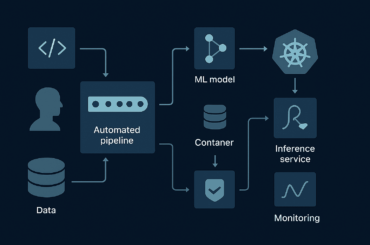
- Ignoring production realities: Building AI demos that don’t scale, monitor, or integrate well.
The startups that win in 2026 treat AI as infrastructure, not a feature.
How Startups Think Differently About AI Than Enterprises
Successful startups:
- Start with clear pain points
- Ship small, iterate fast
- Keep humans in the loop
- Measure outcomes, not novelty
Enterprises often:
- Launch large AI initiatives
- Require alignment across teams
- Move slowly to reduce risk
Neither approach is “wrong” — but speed favors startups.
Building an AI Strategy That Actually Scales
Startups that sustain their AI advantage focus on:
- Clean data foundations
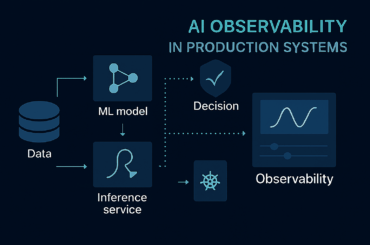
- Simple, observable systems
- Cost-aware infrastructure
- Responsible and explainable usage
They know that AI debt accumulates just like technical debt — and they plan for it early.
The Real Competitive Advantage: Execution, Not Models
In 2026, models are widely available. Tools are commoditized. APIs are accessible to everyone.
What separates startups from enterprises is execution velocity.
AI amplifies that velocity — but only when paired with:
- Clear ownership
- Fast feedback loops
- Willingness to adapt
That’s why small teams keep winning against much larger ones.
Final Thoughts: AI Doesn’t Favor the Biggest — It Favors the Fastest
Startups don’t need to outspend enterprises.
They need to outlearn them.
AI gives startups the leverage they’ve always lacked — but only if used with intent, discipline, and humility.
In 2026, the most dangerous competitor isn’t the company with the most people.
It’s the one that learns the fastest.
FAQs
Startups use AI in 2026 to automate internal workflows, accelerate product development, improve customer support, personalize marketing, and make faster data-driven decisions with smaller teams.
AI benefits startups more because startups can adopt new tools faster, experiment with fewer constraints, and integrate AI without legacy systems or long approval cycles.
No. Most startups use AI to support employees by reducing repetitive work, improving productivity, and enabling teams to focus on higher-value tasks rather than replacing people.
The most common AI use cases for startups include customer support assistance, content generation, analytics summarization, developer productivity tools, and sales personalization.
Generative AI is safe for early-stage startups when used with human oversight, clear data boundaries, and basic monitoring. Risk increases when AI is deployed without review or accountability.